International Baccalaureate Philosophy
Core Theme Collection
Mind-Body Problem
The mind-body problem is a philosophical debate of the relationship between thought and consciousness in the human mind, and the mind as part of the physical body. The argument has two sides, Monism argues that mind and body are one object, dualism which argues that mind and body are two separate objects. Mind-Body Problem is a question presupposes an interactionist account of mind-body relations.
PLATO
Plato believed that the true substances are not physical bodies which are ephemeral, but the eternal Forms of which bodies are imperfect copies. These Forms not only make the world possible, but they also make it intelligible because they perform the role of universals
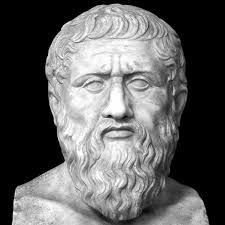
It is their connection with intelligibility that is relevant to the philosophy of mind. Because Forms are the grounds of intelligibility, they are what the intellect must grasp in the process of understanding. In PhaedoPlato presents a variety of arguments for the immortality of the soul, but the one that is relevant for our purposes is that the intellect is immaterial because Forms are immaterial and intellect must have an affinity with the Forms it apprehends (78b4–84b8). This affinity is so strong that the soul strives to leave the body in which it is imprisoned and to dwell in the realm of Forms.
Dualist
René Descartes
In Descartes' work "Meditations". Descartes believed that there were two kinds of substance: matter, which the essential property is that it is spatially extendable; and mind, which is the essential property that thinks. The organ that connects the mind and the physical body is the pineal gland.

Paragraph 9 of Meditation 6:
“And, firstly, because I know that all which I clearly and distinctly conceive can be produced by God exactly as I conceive it, it is sufficient that I am able clearly and distinctly to conceive one thing apart from another, in order to be certain that the one is different from the other, seeing they may at least be made to exist separately, by the omnipotence of God; and it matters not by what power this separation is made, in order to be compelled to judge them different; and, therefore, merely because I know with certitude that I exist, and because, in the meantime, I do not observe that aught necessarily belongs to my nature or essence beyond my being a thinking thing, I rightly conclude that my essence consists only in my being a thinking thing or a substance whose whole essence or nature is merely thinking]. And although I may, or rather, as I will shortly say, although I certainly do possess a body with which I am very closely conjoined; nevertheless, because, on the one hand, I have a clear and distinct idea of myself, in as far as I am only a thinking and unextended thing, and as, on the other hand, I possess a distinct idea of body, in as far as it is only an extended and unthinking thing, it is certain that I, that is, my mind, by which I am what I am], is entirely and truly distinct from my body, and may exist without it.”
Dualist
Gilbert Ryle
In Gilbert Ryle's book "The Concept of Mind", he presents his criticism of Cartesian dualism. Ryle rejects Descartes' theory of the relation between mind and body, on the grounds that it approaches the investigation of mental processes as if they could be isolated from physical processes.
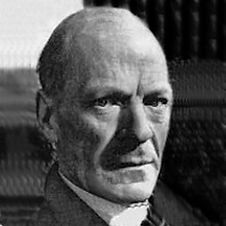
To Ryle, mental processes are merely intelligent acts. There are no mental processes that are distinct from intelligent acts. The operations of the mind are not merely represented by intelligent acts, they are the same as those intelligent acts. Thus, acts of learning, remembering, imagining, knowing, or willing are not merely clues to hidden mental processes or to complex sequences of intellectual operations, they are the way in which those mental processes or intellectual operations are defined. Logical propositions are not merely clues to modes of reasoning, they are those modes of reasoning.